Richard Levinson is not merely part of Columbo history. He is one of the reasons there is a Columbo history.

With his writing partner William Link, Levinson created the character, helped shape the inverted-mystery format that made the series so distinctive, and gave television one of its most deceptively brilliant detectives: a polite, rumpled, under-estimated LAPD lieutenant who never needed car chases, shootouts, or macho posturing to win the day.
Honestly, it is hard to imagine Columbo without Levinson and Link’s fingerprints all over it. Even episodes they did not personally script still tend to live inside the rules they established: the killer is intelligent, the murder is elegant, the clues are fair, and Columbo wins because he understands people better than they understand themselves.
The character of Columbo first appeared not with Peter Falk, but in “Enough Rope,” a 1960 episode of The Chevy Mystery Show. In that version, Bert Freed played the detective. Levinson and Link later expanded the idea into the stage play Prescription: Murder, and then into the 1968 television movie that introduced Falk in the role.
That evolution matters. Columbo did not arrive fully formed from nowhere. He was refined over time: from anthology TV detective, to stage character, to television-movie lieutenant, to series icon.
The 1968 TV movie is more severe than the later series. Falk’s Columbo is sharper around the edges, less cuddly, and more openly confrontational. But the core game is there: the murderer thinks he is superior, and Columbo gradually lets him discover that he is not.
Levinson and Link’s great insight was that the suspense did not have to come from asking, “Who did it?” It could come from asking, “How will Columbo catch him?”
That single shift made the show feel different from almost every other mystery series on television.
This is where the series’ world begins to feel more settled. Peter Falk is looser, the Los Angeles setting has more texture, and the battle of wills between Columbo and the murderer becomes the show’s central pleasure. Leslie Williams, played by Lee Grant, is exactly the kind of opponent the series would return to again and again: rich, composed, and absolutely convinced she can manage every room she walks into.
Levinson and Link understood that Columbo worked best when he entered privileged spaces as an irritant. Mansions, law offices, studios, clubs, beach houses—the Lieutenant keeps wandering into worlds designed to exclude people like him. That visual contrast became such a major part of the show’s appeal that entire fan projects now track the real-life homes and locations used as Columbo crime scenes.
Their usual ingredients:
Their work often had a humane streak that is easy to overlook if one only thinks of them as mystery craftsmen. That Certain Summer dealt with homosexuality at a time when American television rarely did so sympathetically. The Execution of Private Slovik dramatized the story of the only American soldier executed for desertion since the Civil War. My Sweet Charlie brought them an Emmy before Columbo did.
Then, in the 1980s, they helped create Murder, She Wrote, giving television another nonviolent, intelligence-based mystery hero in Jessica Fletcher.
He died on March 12, 1987, at his Brentwood home. He was only 52. The Los Angeles Times reported that he died of an apparent heart attack and was survived by his wife Rosanna, his daughter Christine, and his father William.

Still, what a legacy. Richard Levinson helped create a detective who became instantly recognizable not because he was glamorous, violent, or sleek, but because he was curious, humane, and impossible to fool. For a mystery writer, that is a pretty good case to leave behind.

With his writing partner William Link, Levinson created the character, helped shape the inverted-mystery format that made the series so distinctive, and gave television one of its most deceptively brilliant detectives: a polite, rumpled, under-estimated LAPD lieutenant who never needed car chases, shootouts, or macho posturing to win the day.
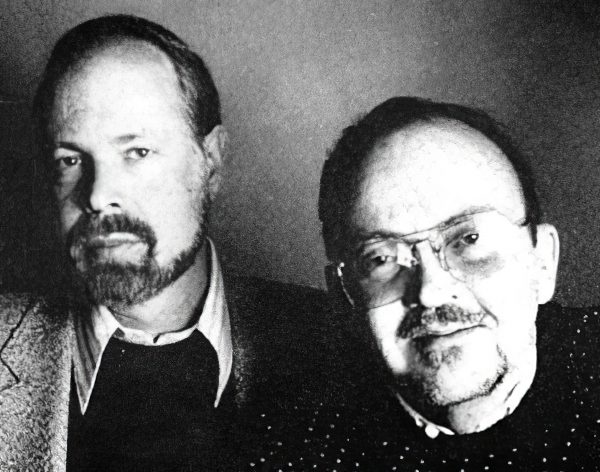 |
| Richard Levinson (L) and William Link (R) |
Honestly, it is hard to imagine Columbo without Levinson and Link’s fingerprints all over it. Even episodes they did not personally script still tend to live inside the rules they established: the killer is intelligent, the murder is elegant, the clues are fair, and Columbo wins because he understands people better than they understand themselves.
The road to Columbo
Levinson and Link’s partnership began long before Hollywood. They met as schoolboys in Philadelphia, sharing an early love of mysteries, magic tricks, and storytelling. The Television Academy’s Hall of Fame tribute describes their friendship and collaboration as beginning on the first day of junior high school and lasting nearly four decades.The character of Columbo first appeared not with Peter Falk, but in “Enough Rope,” a 1960 episode of The Chevy Mystery Show. In that version, Bert Freed played the detective. Levinson and Link later expanded the idea into the stage play Prescription: Murder, and then into the 1968 television movie that introduced Falk in the role.
That evolution matters. Columbo did not arrive fully formed from nowhere. He was refined over time: from anthology TV detective, to stage character, to television-movie lieutenant, to series icon.
Prescription: Murder
Prescription: Murder is the essential Levinson-Link text for Columbo fans. The killer is Dr. Ray Flemming, a polished psychiatrist who believes he has committed the perfect murder. The detective is already recognizably Columbo: courteous, persistent, underestimated, and far more dangerous than he first appears.The 1968 TV movie is more severe than the later series. Falk’s Columbo is sharper around the edges, less cuddly, and more openly confrontational. But the core game is there: the murderer thinks he is superior, and Columbo gradually lets him discover that he is not.
Levinson and Link’s great insight was that the suspense did not have to come from asking, “Who did it?” It could come from asking, “How will Columbo catch him?”
That single shift made the show feel different from almost every other mystery series on television.
Ransom for a Dead Man
After Prescription: Murder, Levinson and Link returned with Ransom for a Dead Man, the 1971 pilot that helped launch Columbo as a regular part of the NBC Mystery Movie rotation.This is where the series’ world begins to feel more settled. Peter Falk is looser, the Los Angeles setting has more texture, and the battle of wills between Columbo and the murderer becomes the show’s central pleasure. Leslie Williams, played by Lee Grant, is exactly the kind of opponent the series would return to again and again: rich, composed, and absolutely convinced she can manage every room she walks into.
Levinson and Link understood that Columbo worked best when he entered privileged spaces as an irritant. Mansions, law offices, studios, clubs, beach houses—the Lieutenant keeps wandering into worlds designed to exclude people like him. That visual contrast became such a major part of the show’s appeal that entire fan projects now track the real-life homes and locations used as Columbo crime scenes.
The Levinson-Link formula
The phrase “formula” can sound dismissive, but in Columbo it is a compliment. Levinson and Link built a structure sturdy enough to survive dozens of variations.Their usual ingredients:
- A brilliant or socially powerful murderer.
- A killing planned with care.
- A detective who appears disorganized but is actually hyper-observant.
- A clue that looks minor until it becomes fatal.
- A final confrontation based less on force than psychology.
Beyond Columbo
Outside Columbo, Levinson and Link had one of the great television-writing partnerships. Their credits include Mannix, McCloud, Ellery Queen, Murder, She Wrote, and acclaimed TV movies such as My Sweet Charlie, That Certain Summer, and The Execution of Private Slovik.Their work often had a humane streak that is easy to overlook if one only thinks of them as mystery craftsmen. That Certain Summer dealt with homosexuality at a time when American television rarely did so sympathetically. The Execution of Private Slovik dramatized the story of the only American soldier executed for desertion since the Civil War. My Sweet Charlie brought them an Emmy before Columbo did.
Then, in the 1980s, they helped create Murder, She Wrote, giving television another nonviolent, intelligence-based mystery hero in Jessica Fletcher.
Personal life
Richard Levinson was born in Philadelphia on August 7, 1934. He attended the University of Pennsylvania, where he and William Link wrote together, founded a campus humor magazine, and began turning a boyhood obsession with mysteries into a professional future.He died on March 12, 1987, at his Brentwood home. He was only 52. The Los Angeles Times reported that he died of an apparent heart attack and was survived by his wife Rosanna, his daughter Christine, and his father William.
Speaking of Rosanna
His wife, Rosanna Huffman, was not unknown to Columbo fans. She had a notable appearance in the show of her own, as Tracy O'Connor...the mistress/accomplice of murderous art critic Dale Kingston in Suitable for Framing.
She returned years later with a small part as one of the real estate buyers in Rest in Peace, Mrs. Columbo.
Comments
Post a Comment