On November 22nd, 1992, Columbo returned from the decidedly un-Columbo-like No Time to Die with an episode that could hardly have been more determined to make up for lost murders. A Bird in the Hand... gives us a planned murder, an accidental death, another murder, a gambling debt, a football franchise, a secret affair, a pipe bomb, a hit-and-run, and one of the most complicated family messes the Lieutenant ever had to untangle.

Written by Columbo veteran Jackson Gillis and directed by
Vincent McEveety, the episode begins by appearing to give us a familiar setup.
Harold McCain (Greg Evigan), a compulsive gambler in serious debt, decides that
the easiest way out is to kill his wealthy uncle, football-team owner 'Big
Fred' McCain (Steve Forrest). But before Harold's bomb can do the job, somebody
else kills Fred first.
That is the episode's central trick. Harold is a murderer
before anyone has been murdered by him, his intended target is killed by somebody else, and then Harold accidentally kills somebody else! By the time Columbo gets to the bottom of things,
the identity of the episode's real killer has shifted beneath our feet more
than once.
Harold's losing streak
Harold McCain has the sort of problem that Columbo murderers
often think money can solve. He owes $30,000 to a bookmaker and has no
realistic way of paying it. His uncle Fred is enormously wealthy, but Fred has
finally had enough of underwriting Harold's bad habits.

Greg Evigan plays Harold as a man who has spent too long
assuming somebody else will rescue him. He is handsome, glib and way too self-confident,
but almost every decision he makes is terrible. When Fred refuses to hand over
the money, Harold does not reconsider his gambling. He decides to murder his
uncle. He figures he’ll either inherit a bunch of money, or he’ll manipulate
his aunt Dolores (Tyne Daly), who he’s sleeping with on the side, into giving
it to him.

His plan is brutally simple. He builds a pipe bomb and
plants it on Fred's Rolls-Royce, expecting the car to explode when Fred starts
it the following morning.
Except somebody gets there first
The next morning, Harold is on his way to Big Fred’s house, where he expects to find out that he was killed when the car exploded. But instead, he comes across a crash scene. The Rolls-Royce is still sitting intact in the driveway, but Fred has been killed in a hit-and-run while jogging.
You can see the moment when Harold realizes he has a new problem...Fred is dead and the bomb is still waiting.

Suddenly Harold has a much more immediate problem than his gambling debt. The bomb is still in Fred's car, police are everywhere, and Lieutenant Columbo is taking an interest in the vehicle.
This is one of the episode's better reversals because
Harold's own murder plan becomes evidence in somebody else's case. He cannot
confess that the car is dangerous without confessing what he intended to do,
and he cannot safely remove the bomb with a driveway full of police officers
watching him.
Waiting to explode
Columbo, naturally, is fascinated by the car. He talks about his own foreign automobile - the famously battered Peugeot - and seems almost childishly impressed by Fred's gleaming Rolls. Harold, meanwhile, has to stand beside him knowing exactly what is hidden underneath.

The scene is a nice example of classic Columbo tension. The
Lieutenant does not yet know Harold planted the bomb, and Harold does not know
how much Columbo suspects. But the audience understands the danger in every
casual suggestion that somebody move the car.
Harold tries to make sure nobody can find the keys.
Unfortunately for him, the gardener Fernando has his own set.
Poor Fernando
Fernando, played by Leon Singer, is one of those minor
Columbo characters who becomes memorable because he seems like an actual person
rather than a plot device. He is helpful, energetic and eager to cooperate with
the police.

When the driveway becomes congested, Fernando volunteers to
move the Rolls. Harold can do nothing but watch.
The resulting explosion is unusually spectacular for
Columbo. The car erupts, officers are thrown by the blast, and Fernando is
killed by the murder device intended for somebody who is already dead.

The moment changes the moral weight of Harold's actions. Up
to that point he is a would-be murderer whose plan has failed. After the
explosion, his bomb has killed an innocent man. What little sympathy might have
existed for desperate Harold, disappears rather quickly.
The camera was rolling
The explosion also happens to be filmed. Bertie, the football team’s general manager, has arrived with a camera crew, hoping to turn the tragedy surrounding the famous team owner into publicity. The footage later gives Columbo something he can study rather than merely reconstruct from witness statements.
Does anybody care who killed Big Fred?
Once the car explodes the focus of the episode shifts to
that. Oddly there’s almost no mention at all of Big Fred’s death until nearly
the end of the episode. And in the wrap up Columbo essentially waves it off.
Dolores McCain
Tyne Daly plays Fred's widow, Dolores, and for much of the
episode she seems almost peripheral to the mechanics of the case. That is
deliberate. Harold occupies the foreground while Dolores watches, drinks and
absorbs what is happening around her.

The fact that Dolores and Harold are secret lovers makes the
family arrangement unpleasant enough even before murder enters it: Harold is
carrying on with his uncle's wife while simultaneously plotting to kill the
uncle for money.
Daly gives Dolores a worn-down quality in the early scenes.
Fred's personality has dominated the household, and her relationship with
Harold does not exactly represent an escape into something healthier. She is
surrounded by men who assume they can use her.
From widow to owner
Fred's death changes Dolores's position overnight. She
inherits control of the football team and, with it, a kind of authority she has
never seemed to possess before.
The later scenes let Daly subtly shift the character.
Dolores drinks because she wants to, entertains football players, and begins
making decisions for herself. It is not quite Beth Chadwick's transformation in
Lady in Waiting, but there is a similar sense of a woman taking charge of her
life after a domineering man has disappeared.
You can kind of see the moment when Dolores switches gears to become the woman in charge.

"Boy, you have blossomed since Fred's death."
The complication is that Dolores has not merely survived Fred. She has killed him.
Harold figures it out
Harold eventually realizes that Dolores was responsible for
the hit-and-run. Once he sees the truth, his response tells us everything we
need to know about him: he tries to turn the knowledge into leverage.
Instead of protecting Dolores, confronting her morally or
even keeping quiet, Harold attempts to blackmail her into solving his financial
problems. He assumes their affair gives him control.
That assumption proves to be his final bad bet.
The second murderer becomes the third victim
Harold is found dead, and with his death the episode changes
shape again. The man we have spent much of the story treating as Columbo's
primary suspect is now a homicide victim.
Jackson Gillis had used mid-story reversals before, and A
Bird in the Hand... is built around perhaps his most elaborate version of the
idea. The audience begins with Harold as the would-be killer, sees his bomb kill Fernando instead, and then has to
reconsider everything when Harold himself is murdered.
The device is undeniably clever. It also comes with a cost:
the story spends so much time moving pieces around that Dolores, ultimately the
person Columbo must catch, receives less sustained attention than many
classic-series murderers.
One thing that was interesting, and I wonder if it was an artifact of them just having too much story for the time allotted, we saw Fernando's death explosively (and repeatedly) revealed. With Harold's murder though we only saw Daly even hold the gun for a few seconds, and we cut right from her preparing for the murder, to officers responding to the scene after he was dead.

Speaking of which...
If the scene with the police cars racing to Harold's house looked familiar...it was the exact same B-roll that we saw in the previous episode when they were racing to rescue Melissa in No Time to Die.

Columbo and Lieutenant Robertson
Frank McRae appears as Lieutenant Robertson, the officer
working alongside Columbo. Robertson is more conventional and more willing to
accept the obvious explanation, which gives Falk someone to play against as the
case becomes increasingly tangled.

McRae had the size and screen presence to be a formidable
partner, although the script mostly uses Robertson as the detective who reaches
conclusions before Columbo is ready to accept them. The contrast is familiar:
other cops see a plausible answer; Columbo keeps worrying at the one detail
that does not fit.
The left-handed bomb maker
One line of Columbo's investigation concerns the way the pipe bomb was installed. The physical marks around the car suggest that the person who worked beneath it positioned himself in a particular way.
That sends Columbo to a luxury-car dealership, where he gets
underneath a vehicle and experiments with the posture himself. The scene is
intended to show how he reasons from the marks on the ground to the likelihood
that the bomb maker was left-handed.
Conceptually, it is excellent Columbo detective work: take
an ordinary physical detail, recreate the action and learn something about the
person who performed it.
The dealership scene
The execution is another matter. The sequence is played very
broadly, with Columbo wriggling under the car while onlookers gather outside
the showroom window. The comedy threatens to overwhelm the clue.

This is one of the recurring tensions of the revival years.
Peter Falk could make Columbo funny simply by behaving like Columbo. The later
films occasionally stop the mystery to stage a comic routine around him. A Bird
in the Hand... would be stronger if this particular scene trusted the detective
work and played the humor a little straighter.

The plot hole under the car
The other problem with this clue is that Columbo shows it
takes some work to get at the spot where the bomb was attached. But it looks
like it would have been much easier to do it from the driver’s side…so it’s not
clear why anybody, Harold or Columbo, would squeze and wiggle from the
passenger side.

Did the dealership look familiar?
It should. The same dealership appeared in Death Hits the Jackpot as the dealer where Freddy buys the Ferrari.
Harold's haircut
The decisive clue in Harold's murder comes from something
almost embarrassingly ordinary: a haircut.
Columbo has a hat connected to Harold. Casino witnesses
establish that Harold wore it during his long night of gambling before getting
his hair cut. Laboratory examination finds small clipped hairs inside the hat.

That matters because the hat was found at Dolores's house
after Harold's death. If Harold had already had his haircut before he died, and
the newly cut hairs were inside the hat when it was left at Dolores's house,
then Harold had been there after the haircut.
In other words, he did not die where Dolores wants the
police to believe he died.
One in the hand
The final confrontation is unusually practical. Columbo
believes Dolores killed Fred, but he does not need to prove it.
He can prove she killed Harold.
That distinction is the episode's neatest piece of writing.
Dolores challenges him over the first killing, and Columbo essentially declines
the invitation. Fred's death may remain harder to establish in court; Harold's
does not.

The title finally pays off. Columbo has one provable murder
in hand, and that is enough.
Tyne Daly's quieter killer
Daly is the strongest actor in the guest cast, but the
structure gives her a strange assignment. For much of the running time, she
must hide not only Dolores's guilt from Columbo but Dolores's importance from
the audience.
That keeps the twist intact, yet it means we never quite get
the long psychological duel Falk enjoyed with performers such as Ruth Gordon,
Anne Baxter or Faye Dunaway. By the time Columbo focuses directly on Dolores,
the episode is already heading toward its conclusion.

Still, Daly makes the character more interesting than the
screenplay sometimes allows. Her shift from defeated wife to confident owner is
believable, and the final scenes have an appealing ambiguity. Dolores is
plainly guilty, but she is also someone who has spent years being pushed around
and has suddenly discovered that the pushing can stop.
If I have one criticism of Daly’s performance it’s that her
accent seems to come and go a bit.
Greg Evigan rolls the dice
Greg Evigan gets the flashier role. Harold is reckless, vain
and frequently unpleasant, but Evigan commits to the character's nervous
energy. Harold is constantly calculating: how to get money, how to retrieve the
bomb, how to redirect Columbo, how to exploit Dolores.

The irony is that he is a gambler who never seems to
understand odds. Every solution he chooses creates a worse problem. Even when
he finally possesses genuinely valuable information - Dolores's guilt - he
misjudges the danger of using it.
The episode does not ask us to like Harold. It asks us to
watch him keep betting until there is nothing left to lose.
I give Evigan credit for buying into the role. He doesn't phone it in. But in many ways Harold is the weakness of the episode. He's just so cringy.
Big Fred and Bertie
Steve Forrest's Big Fred has relatively little screen time,
but he quickly establishes the character as a booming, controlling presence.
That is important because Fred's influence continues after his death.
Everybody's position changes once he is gone.
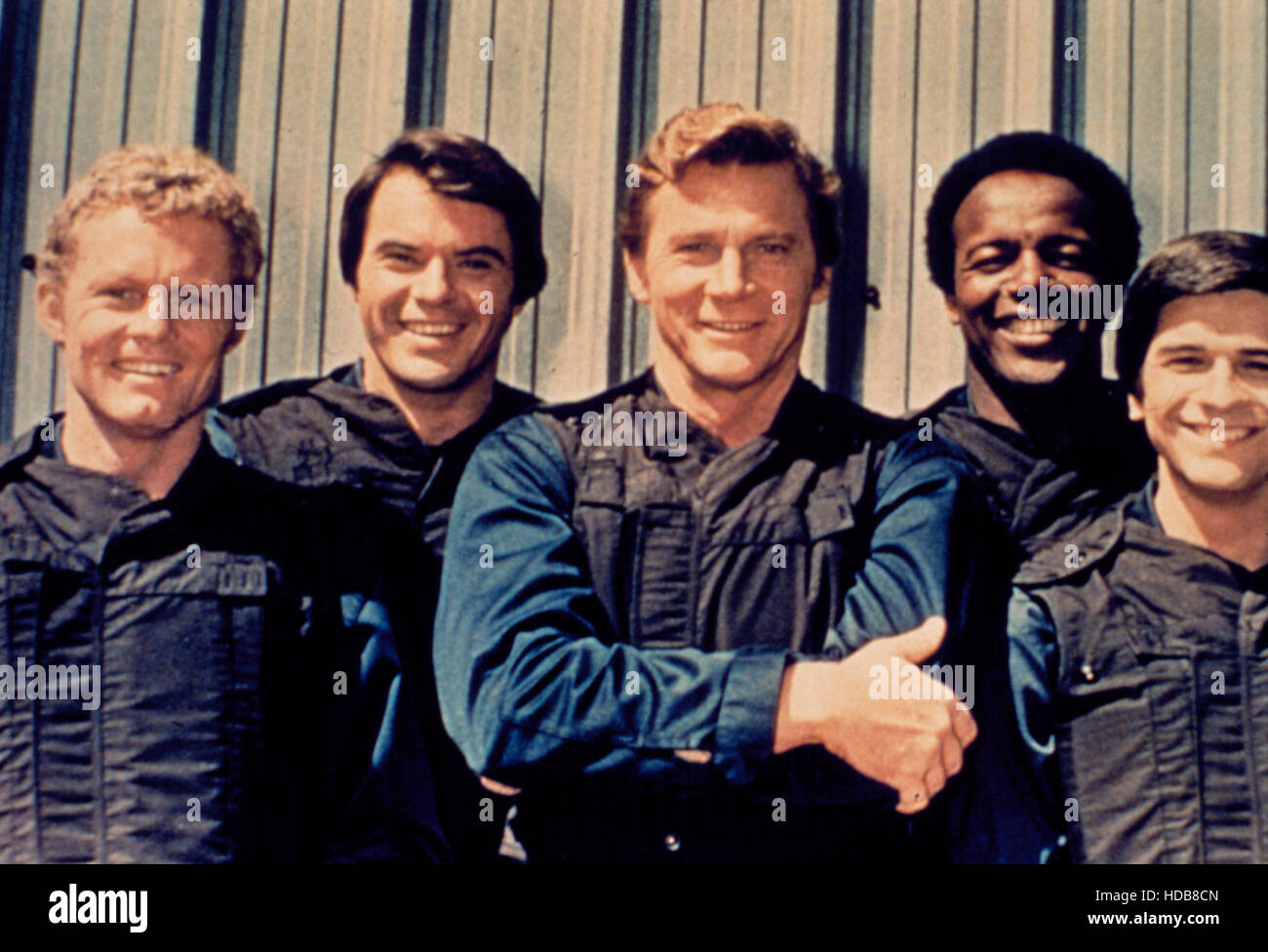
If Forrest looks familiar to you, then you might have been a fan of the TV show S.W.A.T. in the 1970s. Forrest played "Hondo" the leader of the S.W.A.T. crew.
Don S. Davis plays Bertie, Fred's general manager and lawyer.
Davis would later become much better known to television audiences as General
George Hammond on Stargate SG-1, but here he is part of the business machinery
surrounding the McCain family and its team.

The football team gives the episode a public dimension most
Columbo murders don’t have. Fred is not just a rich man dead at home; he is a
local celebrity whose death affects a franchise, employees, fans and the press.
Football, gambling and Los Angeles
The episode makes generous use of Los Angeles locations. The
Los Angeles Memorial Coliseum stands in for the Stallions' football world, much as it did for the Los Angeles Rockets back in season 2's The Most Crucial Game. The Commerce Casino supplies Harold's gambling environment.
20181 Northridge Road in Chatsworth was
Big Fred's mansion, Kelly Gulch at 1801 N. Topanga Canyon Boulevard is Harold's
house, and the former Mercedes-Benz of Encino property at 16721 Ventura
Boulevard is the luxury-car dealership.
A returning Columbo team
Director Vincent McEveety was one of the series' most
experienced hands. By 1992 he had been directing Columbo since the 1970s and
would remain closely associated with the revival.
Jackson Gillis had an even longer Columbo history as a
writer, contributing scripts from the early 1970s onward. His affection for
reversals and structural tricks is on full display here. The episode does not
merely ask who committed the murder; it repeatedly changes which murder we are
talking about.
Dick DeBenedictis composed the score, returning to a series
for which he had supplied music on numerous classic-era episodes. His presence
gives A Bird in the Hand... another link to 1970s Columbo even as the plotting
and production are unmistakably from the revival period.
The opening music
The use of Tony Bennett's 'Rags to Riches' over the opening
is an inspired thematic choice. Harold wants precisely that transformation,
except he is trying to reach riches by gambling, borrowing, blackmail and
murder rather than anything resembling honest effort.
The song gives the episode an immediate swagger and also frames Harold's entire story as a fantasy of easy money.
Falk back in familiar territory
After No Time to Die, it is reassuring to see Peter Falk once again doing the things the character does best: hovering around a suspicious person, noticing trivial objects, testing physical possibilities and declining to accept the first tidy explanation.
The performance is not without revival-era excesses,
particularly in the dealership sequence, but most of the time Falk keeps
Columbo grounded. He is especially effective when he becomes more direct with
Dolores near the end. The softness remains, but the pretense has largely fallen
away.

He knows.
Just a few more things
The car bomb plan is surprisingly well-prepared, which doesn't seem like the way Harold does things. He even practices, blowing up a junk car as a test.

Slightly too much on the plates
One small literary license they took was with Fred's license plates - STALLION1. California personalized plates are limited to 7 characters.
Just enough Hacker
Wisely they, barely, didn't overplay the Hacker angle. Harold owes him money, Hacker is angry and dangerous, Harold is in trouble. But they didn't overdo it.

It would have been easy for them to weave Hacker deeper into the story, and that would have just been a distraction.
Too much football
Football scenes are something Columbo traditionally struggles with. One of the subtler problems is that the announcer doesn't seem to know the names of the players. "Williams catches the ball!" (but the player on the screen plainly has "Smith" written on the back of his jersey).

I know they have to do the scenes to set the atmosphere...but they might have been better doing a little less of them. Or putting a bit more effort into them.
No Fred and Dolores
We didn't see much of Big Fred, he's killed fairly early in the episode. But did you notice that we never once see Big Fred and Dolores together? We hear him singing in the background at one point, but they're never on screen together.
I can't help but wonder if that was an intentional choice to convey the distance between them.
She's got a murder closet?
It struck me as odd that Dolores already has a closet with burglary tools and an Amtrak schedule all ready to go.

I liked the casino scene
I'm not sure why exactly, maybe it's just because I was pleased to see Ed McCready, but I liked the scene where Columbo goes to the casino to verify that Harold was there.

Why does the hat need an entrance?
The Gotcha scene is pretty good, but it's not clear why Columbo needed the officer to wait outside with the hat until late in the scene. Why couldn't Columbo just bring the hat in with the rest of the clothes?

So does the episode work?
Sort of.
A Bird in the Hand... is ambitious, twisty and at times
overstuffed. Harold is not a sympathetic or sophisticated
antagonist. Dolores is more interesting than the amount of screen time she
receives. Fernando's death deserves more emotional consequence. Big Fred's death needs to not be totally forgotten. And the
luxury-car dealership comedy is broader than the surrounding story needs.
But the initial reversal is a gorgeous twist, the bomb
sequence is memorable, the haircut clue is pleasingly mundane, and Tyne Daly brings
depth to an underwritten role.

"You were a big help Bertie, I don't know what I would have done without you."
Most importantly, this feels like Columbo again. Not classic Columbo at its best, but a recognizable example.
Comments
Post a Comment